Showing posts with label retail. Show all posts

Wednesday, January 6, 2016

Hang Together? Or Separately?

"We must, indeed, all hang together or, most assuredly, we shall all hang separately."  
-Benjamin Franklin

If you're a student of the American Revolution, you will recognize the quote above. Franklin's message was that the signers of the Declaration (as well as colonists in general) had to help and support each other or they were doomed.

I believe that is much like a local community. If those of us in a community do not support our local businesses, we won't hang separately or be executed, but we are doomed.

If you live in a small town, you surely have been encouraged to “buy local.” But what, exactly, does "buy local" really mean? Certainly you are being encouraged buy groceries, hardware and clothing locally. But the higher the price of the items you buy locally, the greater the impact your purchase has on the local economy.

According to the website local-first.org, $73 of every $100 you spend returns to the community through avenues such as taxes (which support the local schools and teachers), payroll (which employees may again spend locally), and other expenditures (like support of local events, activities and organizations).


When you buy locally, businesses have the opportunity to create more jobs locally. Simple economics dictates that more local jobs means a greater demand for workers and thus higher wages and/or better benefits for everyone in the marketplace.

When you buy in Mitchell, Rapid City or Sioux Falls or online, none of the money spent stays in in our local community to pay taxes, payroll or any other expenditures. In other words, you are not supporting the local schools and teachers, local events, activities or organizations. 

"But I Can Save Money"

Can you save money? Are the goods or services you are buying really less expensive? Are they of the same quality? Did you consider the value of your time (driving or riding to another community)? Did you factor in the cost of your transportation (fuel, maintenance, depreciation of your vehicle, etc.)? Did you factor in the cost of shipping and handling (of an online order)?

My experience is that, if given the opportunity, local business owners do or would be willing to match the true cost of goods. To be fair, this should include some of the costs mentioned above. The question is, are you willing to give them that opportunity. Do you care enough about the future of our community to look at a transaction fairly and give the local vendor that opportunity?

I am not advocating feel-good, it's-worth-paying-more-for-local concept. I believe that if you do give the local businesses the opportunity to earn your business, you will be rewarded with better prices, better service and a better community. 

Proud to be Your Local Automobile Dealer

As an automobile dealer with stores in Chamberlain and Winner, I ask you to consider applying the logic above when you purchase your next vehicle. I would enthusiastically welcome the opportunity to help you find your next vehicle, get the financing package that fits your needs and provide service for your vehicle going forward. I believe we can bring value and enjoyment to your ownership experience.


Find the Right Vehicle...

The automobile world has changed drastically over the past 15-20 years. It used to be that you would have to go to the dealership to see a vehicle. The internet allows you to shop online for the right vehicle. Smart phones and tablets let you do that from virtually anywhere. 

It does not make sense for a small town dealership to stock hundreds of vehicles and pay the interest associated with stocking so many vehicles when we can have access to many more vehicles without the expenses. We have a network of dealer-partners across the Midwest with which we trade and buy cars, trucks and SUVs. This expands our "true" inventory exponentially. 

Our professional staff will find the new or used vehicle you are looking for. You won't have to drive all over looking for that "just right" automobile. You tell us what to find, and WE WILL FIND IT!!

...At the Right Price...

When you buy local at Harry K's, you will save money! Our prices will reflect lower costs and will
save you money when compared big city stores. Our overhead expenses (interest, taxes, facility, utilities, salaries, etc.) are much lower and we pass that savings on to our customers!

...And Payment...

At Harry K's, we have access to more than a dozen different financial institutions that specialize in automobile financing. We will shop these banks and pit them against each other to get you the best interest rate possible. 

We will use our buying power to help you get financed even if you have had some bad luck in your financial past. We will work hard to serve your financing needs because you're not just another customer, you're our friends and/or neighbor as well!

...And We'll Take Care of You Down the Road...

Our service professionals are training weekly so that they provide the best service for your vehicle. The value to you is that you can be assured that your vehicle will continue to perform at the highest level and when you come back to trade your vehicle, it retains the greatest value possible because we have a service record.

Growing Together

We believe that when businesses in the community thrive, the community thrives. Unlike big city businesses or dealerships, we are proud to give back to our community. We know the summer rec and swim team schedules because our sons and daughters play and swim on the teams. We are not just your local dealer, we are stakeholders in your community. Supporting your local dealer means supporting the small-town community.


You are more to us than a paycheck or a profit. You are our friends and neighbors. Give us a chance to earn your business. I believe you benefit and our community will benefit!


Monday, March 2, 2015

Don't Park That Cash in Your Leased Vehicle

Leasing your next vehicle may be a more attractive option than it has ever been before. I have posted previously about the leasing. Driven by high residual values and low lease (interest) rates, lease payments currently allow you to drive more vehicle for the money than purchasing does.

Leasing also afford the car buyer to avoid a long-term commitment. When you sign a lease, you’re essentially financing the vehicle for a set period of time and when the lease is up, you return the vehicle to the lessor and move on. This can be an attractive option for anyone who isn't interested in keeping a vehicle for the long haul or those who want to trade up for a new model every few years.

I am often asked about down payments on a lease. Most manufacturer-advertised lease payments include a down payment. It is usually in the fine print at the bottom of the television screen and flashes up so fast you cannot read it. It may be at the bottom of the page in print so small you need a microscope to decipher it or speed read at the end of the radio commercial faster than you can listen!

In order to guarantee customers the lowest and most attractive payment possible, these ads include a sizable down payment up front. Typically, this money goes towards paying a portion of the vehicle lease up front. But ponying up all that cash early on doesn't always work in your favor.

While a down payment may lower your lease payment, there is some risk that comes with putting money down to lower your payments. Often this down payment money comes from the equity in the vehicle that you may be trading. While it seems logical to roll this money into the next vehicle, it is not necessarily the best thing to do.

If the leased vehicle is stolen or totaled in an accident during the first few months of the lease, the insurance company would reimburse the leasing company only for the value of the car. They will not reimburse you for the money you put down. Not only would you be short a vehicle but you’d also be out your down payment money.

Paying less up front or even nothing at all may make your monthly payment a little higher but you wouldn't have to worry about coming up short if something were to happen to your leased vehicle. If you have the discipline to do so, you can put your money in an investment account and benefit from it growing rather than spending it to reduce your payments. You always have that money to fall back on in case you have trouble making a payment some month.

Leasing is a very good option for most prospective vehicle buyers. But you must structure the lease in the manner that is most beneficial to your situation. Let me strongly caution against putting money down on your leased vehicle.


Thursday, January 10, 2013

Do as I Say; Not as I Do!

According the the Governors Highway Safety Association, thirty-nine states have distracted driving laws. Michigan just became the most recent. Some localities have additional regulations. (FYI: South Dakota is not on the list though several of our larger cities are.) So that means you are safe on the roads as there is no texting and driving in those states - right?

I doubt that is the case. Though we live in a culture that acts as if all we have to do is pass another law and we have changed the behavior, I think we all realize that is not the case. I am not big on passing "feel good" laws.

Perhaps distracted driving laws help us drive home the point but it will take much more than passing laws. This is both an education issue and a behavioral issue.

We need to educate people, not just young people, (that does not necessarily mean spend more money) on the dangers of distracted driving. Who's responsibility is this and how do we do it?

I believe it is everyone's responsibility. We need an effort like the one that caused young people to tell their parents to "buckle up". It starts in the schools but does not end there. There are various efforts afoot now. But there is no education effort like the one that happens at the dinner table!

While there are ideas for how parents can control their children's behavior, there is no substitute for talking to your kids! Don't know what to say or how to say it? Here are some ideas.

We car dealers have a responsibility in the education process. It is our customers that put themselves at risk using our products.

Teens get a bad rap on this issue. While plenty of teens are guilty of texting while driving, there are many parents and other adults who set a bad example and who need to "look in the mirror" when it comes to how they act behind the wheel. .

I have never done much texting while driving and I tend to be a hands-free phone user. But I have, in the past, tried to read and answer emails while behind the wheel. What's the difference? NONE! So while I'm telling my two daughters and son not to text while driving, I am guilty of it my self.

"I can't hear what you are saying because you actions speak so much louder than your words!!"

So my New Year's resolution is to not be distracted while driving. No texting! No email! No dialing! No eating! (that one coincides with another of my 2013 resolutions!)

As Jim Morrison and the Doors sung, "Keep your eyes on the road and your hand upon the wheel!" (Don't forget to buckle up too!)

Friday, November 16, 2012

Your Actual Mileage May Vary!

It is fair to say that fuel consumption is a significant factor when Americans are on the hunt for their next vehicle. Recognizing this, automakers go to great lengths to tout fuel consumption in an effort to convince car buyers to buy their product. Competition is fierce, especially in a $4/gallon fuel environment. Little wonder then that car buyers are incensed over news on November 2, South Korean automakers Hyundai Motor America and Kia Motors America announced that they had overstated the fuel economy on nearly a million late model vehicles.

In June, acting as the poster boy for fuel efficiency, Hyundai petitioned the U.S. government to declare August “National Fuel Efficiency Month.” Hyundai North American CEO John Krafcik made this comment, “As America’s most fuel-efficient car company, we want to inspire people and show them how fuel efficiency can help their wallets and the planet at the same time, no matter what kind of car they drive”.

There is no shortage of hand-wringing among the automotive press. They are quick to fawn over these fuel consumption figures (without verifying them in many cases I might add), and then among the first to chastise the automakers when the truth comes out.

Apparently this is a case of asking for forgiveness rather than permission:


“I sincerely apologize to all affected Hyundai and Kia customers, and I regret these errors occurred,” said Dr. W. C. Yang, chief technology officer of Hyundai/Kia research and development. “Following up on the EPA’s audit results, we have taken immediate action to make the necessary rating changes and process corrections.” 
Hyundai said “procedural errors at the automakers’ joint testing operations in Korea led to incorrect fuel economy ratings for select vehicle lines.” 
“Given the importance of fuel efficiency to all of us, we’re extremely sorry about these errors,” said John Krafcik, president and CEO of Hyundai Motor America. “When we say to Hyundai owners, ‘We’ve got your back,’ that’s an assurance we don’t take lightly. We’re going to make this right for everyone, and we’ll be more driven than ever to ensure our vehicles deliver outstanding fuel economy.”
Hyundai blames procedural errors for the problem. Really? Anyone who took sixth grade math can divide the miles driven by the fuel used. It didn't take Hyundai/Kia owners long to figure out that they weren't getting the fuel mileage the manufacturers claimed they would! Is it possible that Hyundai/Kia stretched the truth?

From the Detroit Free Press:
Sung Hwan Cho, president of Hyundai's U.S. technical center in Michigan, said the EPA requires a complex series of tests that are very sensitive and can have variations that are open to interpretation. The companies did the tests as they were making a large number of changes in their cars designed to improve mileage. The changes, such as direct fuel injection into the cylinders around the pistons, further complicated the tests, Cho said.
Who the hell verifies these "EPA Fuel Economy" figures anyway? These inflated mileages were discovered during an audit by the Environmental Protection Agency. One would think that, since the EPA has their name on them, they would require some proof of the claim.

How would the consumer press have reacted is this would have been Chevrolet or Ford rather than Hyundai or Kia? How about the main stream media? Do you think this would have been in the news for one night and then fallen out of the news cycle? Just wondering...


Monday, October 15, 2012

There's ls Lot Riding on It

Like so many other aspects of your automobile, tires are improved, last longer and offer more safety. Well-maintained tires keep your car safer, help it last longer, and save you money, too. So here are some tips from the National Automobile Dealers Association to keep your tires in good shape and your travels safe:
  • Choose your tires carefully. Too many drivers buy a tire based on initial price or appearance. Tire selection should be based on the correct size recommended for the vehicle and its load recommendations. You should consult with a knowledgeable tire or automobile dealer about selecting the proper tire for your typical driving patterns.
  • Buy a tire gauge and keep it handy in your car at all times. It will inform you if you need to add more air to your tires. You can find them at any automotive retailer or supply store.
  • Check your tire pressure at least once per month, and especially before a long trip. Remember, under inflation is a tire's No. 1 enemy, because it can cause damage that may lead to tire failure. However, over inflation can cause uneven wear plus handling and stopping problems. Use the manufacturer's recommended air pressure listed on the sticker of your vehicle's door jamb or owner's manual as a guide. Always check the pressure of your tires when they are cool or cold. Driving heats up tires, making readings incorrect.
  • During wet weather, slow down. As your speed decreases, the tire footprint (the amount of the tire's tread contacting the road surface) increases, providing better traction. You also reduce the risk of hydroplaning should you run into water puddled on the road.
  • Rotate your tires every 6,000 miles. If your tires show uneven wear, ask your automotive service professional to check for and correct any misalignment, imbalance or other mechanical problem involved before rotation.
  • Check your vehicle alignment periodically. It's especially important to have an automotive professional check your alignment if you notice your vehicle is pulling to one side when you're driving.
  • Inspect and measure your tire tread. You can do this yourself by placing a penny in the tread groove and if you can see the top of Lincoln's head, then it is time to replace your tires.
  • Check the tire sidewalls to make sure there are no gouges, cuts, bulges or other irregularities.
  • Make sure you do not overload your vehicle because it can create excessive heat inside your tires. An over-loaded vehicle puts stress on tires that can cause damage and lead to tire failure. Check the manufacturer's load recommendation, which can be found on the vehicle information placard inside the driver's side door post, or in the vehicle owners' manual.
Have your tire balance checked periodically. An unbalanced tire and wheel assembly may result in irregular wear.

If you are one of the 85% of Americans who don't regularly check tire pressure, you should consider nitrogen. We take in nitrogen with every breath. Air is composed of:

1% Water Vapor and Other Gases – Escapes up to 250 times faster than Nitrogen
21% Oxygen – Escapes 3-4 times faster than Nitrogen
78% Nitrogen – The largest molecule in air, dry, non-flammable.

Because of their large size, nitrogen molecules are the least permeable and stay in your tire longer. It's not about the nitrogen. It's about reducing oxygen, water vapor and other gases.

By reducing the percentage of oxygen, water vapor and other gases in your tires from 22% to 7% or lower, your tires will maintain proper pressure longer than if you use “plain old air.” For example, with 95% nitrogen in your tires, they retain optimal pressure three to four times longer.

Remember that by checking your tires regularly, you will keep your travels safe, enjoyable and affordable.

Thursday, September 27, 2012

Don't Buy the Whole Cow if You Just Want a Glass of Milk!

So you think you know what car you want. Now you have to decide whether to buy the car or lease it. For some, there is no dilemma because they either don't think leasing is right for them or they don't understand leasing. Either of those may be true, but you owe it to yourself to learn more about leasing before eliminating the leasing option.

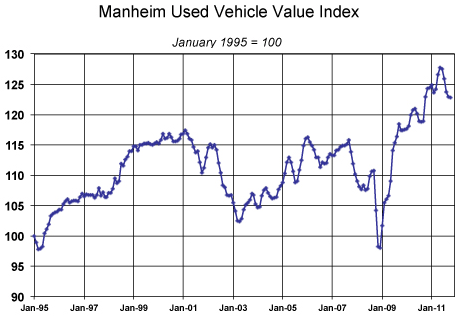
Used vehicle prices have been very strong for the past eighteen months as I noted here. Manufacturers have used the shortage of late model used cars to their advantage in offering lease payments on relatively short leases (less than 30 months) knowing that the vehicles will come back off lease into a strong used car market. So the residual values (what the car is worth at the end of the lease) are higher which means a lower lease payments.

Here are some factors to consider as you make your next vehicle decision:


Leasing Advantages

  • Lower Monthly Payments - because you only pay for the portion of the car or truck that you actually use, your monthly lease payments can be up to 60% lower than for a purchase loan for the same car and same term. You get more car for your money. 
  • No (or low) Down Payment - when the lease begins, you'll just have to pay the first month's payment, title, taxes, registration, banking fees, and a security deposit. Some promotional lease deals require a down payment to get to the advertised payment. But because car leases require little or no down payment, your cash is freed up for other things. 
  • Warranty throughout Ownership - because the lease term is shorter than a purchase term, your vehicle is likely covered during the entire time you drive it.
  • New Vehicle More Often - drive a new vehicle every two to four years, depending on the term length of your lease.
  • Lower Tax Bite - you don't pay sales tax on the entire value of a leased vehicle as you would if you purchased. You're only taxed on the portion of the value that you use during your lease.
  • No Used-Car Hassles - the headaches of  negotiating a trade value or selling a used car are eliminated. When your lease ends, you simply turn it back to the leasing company and walk away.
  • Gap Coverage Included - Most car leases automatically include free "gap" protection in case your vehicle is totaled in an accident or stolen, which pays off your vehicle even if insurance doesn't cover the full loss. Loans do not generally come with automatic gap protection.
  • Option to Buy - you have the first option to purchase your leased vehicle at the end of the lease at a price that is determined at the time you lease the vehicle.
  • Reduce the Risk of Car Ownership - South Dakota has a damage disclosure law which requires that you disclose any damage to your vehicle exceeding $5,000 at the time you sell it. This typically diminished the value of the car significantly. Some states consider SD Damage Disclosure a "Salvage" brand on the title when the vehicle is titled in their state. If you are leasing the vehicle, though you are responsible for carrying insurance and repairing the vehicle, you are not liable for any diminution of value.

Leasing Disadvantages

  • Early Termination Cost - if you must terminate your lease before the end of your contract, the cost is usually very high, much higher than might be expected. However, cost can be minimized by making the right termination choices. But because the leases are so short (under 30 months). Most people end their lease on schedule and do not end early, which avoids all early termination costs.
  • Little or No Ownership Equity - because monthly lease payments are so low, you typically do not build ownership or trade-in value in your leased vehicle. It is possible, however, that the market value of a vehicle at lease-end is higher than the purchase option price specified in the lease contract — which means you may have some equity trade value. You could end up with a few thousand dollars of unexpected equity.
  • Excessive Mileage Charges - here in the Midwest, we tend to drive more miles annually than people do in other parts of the country. If you exceed the mileage allowance in your lease contract, you will be charged for the extra miles at a specified per-mile rate, usually a reasonable $0.20 per mile. A large mileage excess could result in a hefty charge, even at a reasonable per-mile rate. You can reduce your exposure and build the excess miles into the payment if you "buy" the extra miles you expect to drive at the time of lease signing. You avoid the higher end-of-lease charge this way. But be assured on one thing - you pay for those miles whether you lease or buy. The lease can offer a tidier way to incur those charges.
  • Excessive Wear-and-Tear Charges - If you return a leased vehicle at lease-end with excessive dents, scratches, or unrepaired accident damage, you will be charged — because those damages reduce the vehicle's value. Most lease companies clearly specify what is considered "excessive" so that you'll know if you should get it repaired before returning your vehicle. Get the repairs done yourself before you return the vehicle and avoid being charged.
  • If you have the option to buy the car at the end of the lease (as is often the case), you'll have to make that decision as soon as the lease ends, whereas if you owned the car you could decide exactly when to sell it.
Leasing isn't the right choice for everyone, but if you can take care of a vehicle properly, and can adhere to the mileage restrictions, it may be the best choice for you!

12/4/2012 UPDATE: Five myths about leasing a car
3/7/2013 UPDATE: Kiplinger: Smart reasons to lease your next car

Tuesday, September 4, 2012

The Granolas' Big Win

An adjective used to describe people who are environmentally aware (flower child, tree-hugger), open-minded, left-winged, socially aware and active, queer or queer-positive, anti-oppressive/discriminatory (racial, sexual, gender, class, age, etc.) with an organic and natural emphasis on living, who will usually refrain from consuming or using anything containing animals and animal by-products (for health and/or environmental reasons), as well as limit consumption of what he or she does consume, as granola people are usually concerned about wasting resources. Usually buy only fair-trade goods and refrain from buying from large corporations, as most exploit the environment as well as their workers, which goes against granola core values. The choice of not removing body hair (see amazon) and drug use are not characteristics that define granola people, and people, regardless of granola status, may or may not partake in said activities. This definition is sometimes confused with hippy.
-- Definition of a "Granola" according to Urbandictionary.com.

The "granolas" got a big win last week and almost no one noticed. The main stream media was so wound up about the Republican Convention and hurricane Isaac that they totally missed this one.

The Obama administration enacted the new corporate average fuel economy standards. Automakers will be forced to double the fuel efficiency of their vehicles to a fleet average of 54.5 miles per gallon by 2025.

Please don't get me wrong. I, like most other car dealers I know, am all for increased fuel economy and less dependence on foreign oil. But I want, and need, to be able to sell vehicles that my customers want to buy.

South Dakota is truck country. My customers are farmers, ranchers, outdoors men and small business people for whom their vehicle is more than just a means of transportation. It is a tool with which they go about doing their work. They cannot get the job done in some bubble-shaped plug-in hybrid.

Not only will these new standards reduce the availability of trucks (if not eliminate them completely), you can expect the average price of vehicles to go up by $3,000 to $5,500 per vehicle as well. If the consumer cannot afford the new vehicles, they will not buy the vehicles and all the "fuel savings" is lost anyway.

The "granolas" will tell you that people will save that money in fuel. One problem, banks don't lend on fuel savings. They lend on equity and payment to income data. In 27 years, I have never had a bank contract buyer as me how much to factor into the equation for customers fuel savings. So if the customer can't buy the vehicle, he cannot save the fuel cost!
This will also cause a loss of jobs in the automobile manufacturing segment as customers are eliminated from the market. But then the Obama administration has never shown a great deal of regard for jobs.

The "granolas" will tell you that some thirteen automakers agreed to these new standards. Well, let's see, who those might be? Should we start guessing with those who do not have an entry in the full-size truck or SUV market?

So the "granolas" push us toward smaller (less safe), more expensive and less utilitarian vehicles.

I wonder if the "granolas" have ever considered where the electricity for those plug-in hybrids comes from. 54% of the electricity in our country is produced by coal - but then they want to rid us of that as well!

Wednesday, August 22, 2012

Who Do I Scream at...

...when the driverless car cuts me off!!??

Anthony Levandowski, Google's autonomous car project manager, spoke to NADA Board of Directors at our summer board meeting in Napa, CA in June. He told us that Google is ready to team up with a major automobile manufacturer.

He told us that Google has tested the vehicle over 250,000 miles and there have been only two mishaps, both of which occurred when the vehicle was being driven manually! He think the next major hurdle will be convincing governments and consumers that autonomous cars are safer than having a human being in control.

Google claims that up to 90 percent of all crashes are caused by human error. Levandowski was motivated to start this project when his wife and son were in a severe car accident caused by driver error. He suggested that the technology could be on the market within three years and could be in wide use in 5-6 years.


Nevada passed a law in June 2011 concerning the operation of driverless cars in Nevada, which went into effect on March 1, 2012. It is speculated that Nevada was targeted as the first state because of the Las Vegas Auto Show.

Levandowski explained (in as simple a terms as possible!) that the car uses video cameras, radar sensors and a laser range finder to “see” other traffic, as well as detailed maps to navigate the road ahead. This is all made possible by Google’s data centers, which can process the enormous amounts of information gathered by our cars when mapping their terrain. The process is explained deeper here.

When asked why a Toyota Prius was used as the prototype, Levandowski suggested that was what they had. The technology is compatible with any make and brand. Google is not interested in marketing vehicles, he said, only bringing the technology to the marketplace.

The emotions in the room as Levandowski made his presentation were very interesting, ranging from heads shaking in disbelief, obvious skepticism at the whole notion of a driverless vehicle and relief when he suggested that Google was not interested in selling vehicles. After feeling each of these emotions and more, I settled at excitement.

It is exciting to see the technology advance and it is very exciting to think we can help make our nation's highways safer. After the presentation, he invited us outside where he had the vehicle. I got the two photos above with my phone.

Monday, August 20, 2012

How You Can Drive a Newer, Nicer Car for Less Money


Would you like to drive a newer, nicer car for less money? Of course you would. Virtually everyone would. What's the catch you ask? There is no catch. Let me explain...

People tend to think of car payments when I pose the question above. While there is no question that car payments are a big component of your transportation costs, there are a few other very important factors.

In addition to car payments, your monthly transportation costs include insurance, fuel costs and maintenance and repair. I would like to challenge you to think beyond car payments and instead focus on all your monthly transportation costs. Let's examine each of the four components.

Car payments - As I mentioned, this is what people typically think about when we talk about transportation costs. Traditionally, a new car means a higher payment. Depending on your current loan terms, a newer, nicer car could mean lower car payments. The current loan environment is perhaps the best we have ever had in the auto industry. At Harry K's, we shop about a dozen financial institutions in order to get you the very best possible rate and terms. We use our volume credit buying strength to your advantage.

Insurance - People often think a newer, nicer vehicle means higher insurance costs. While that may be true in some cases, it is not always true. New and late model used vehicles have many safety features that may actually reduce your insurance costs. If the insurance payment does go up, often the increase is minimal. We have resources available to us that will help you determine what your insurance costs will be.

Fuel Costs - Over the past several years, roller coaster gasoline prices have made everyone more sensitive to fuel economy. Almost every new or late model vehicle will get better fuel economy that an older model of the same type. We have a special calculator that will help you determine how much a newer vehicle will save you in monthly fuel costs.

Maintenance & Repair - Obviously, a newer, nicer car should save you maintenance and repair costs. We also have a program that can help you lower or eliminate these costs.

So your monthly transportation costs are a total of these four factors. If you reduce your costs in one of these areas, it can increase by that same amount on another of the areas and your overall monthly transportation cost remains the same. For example, if you buy a vehicle that gets better fuel economy and will save you $15/month (remember we have a special calculator that will help you determine this) your car payment can increase by $15/month and your overall transportation costs remain the same.

I'd love to show you more exact data that deals with your specific information. Call Harry K Chevrolet at 800-888-0544 or Harry K Ford at 800-888-1419.

Tuesday, June 26, 2012

Fireworks, Featherbones, Family and... FREEDOM

As Independence Day fast approaches, I look forward to our annual family festival. I have always loved the 4th of July. But when our oldest was born on the Fourth (during the re-dedication of the Statue of Liberty in 1986), this day took on a new significance. Our July holiday is filled with tradition and is a day I truly look forward to as it brings our family back together.

We have always made the Fourth of July a huge celebration. We celebrate a family birthday, our country's birthday and the apex of summer. Our day is filled with activities from morning until night; we love to cram as much fun as possible into the holiday. 
July 4, 2010
The day usually begins with the traditional posting of the flag on the front yard family flag pole. We don't always fly the flag but we do on the Fourth. It seems like a great way to set the tone for the celebration to follow.

My wife usually pulls the ice cream maker down from the attic before breakfast. We received this appliance as a wedding gift (some 29 years ago) and it has reliably churned the ice cream ever since then. She often makes two flavors - plain vanilla and some exotic "Ben & Jerry's"-type flavor. I always opt for the vanilla no matter how tempting option two sounds. Her vanilla ice cream is the best and it is goes well with cupcakes or cake to celebrate our daughter's birthday!


There is usually some family fireworks involved. As the kids have grown older, there is less of that. But since fireworks are legal in South Dakota, there are plenty of fireworks stands and the prices are pretty competitive. The front yard fireworks seem to bring out the kid in everyone. No anthill is safe when the Knust fireworks infantry opens fire! I have vivid memories of my father lighting fireworks with his five and six year-old grandsons and sprinting away from the pending explosion as if he was running the 40-yard dash at the NFL combines. I hadn't seen him run in 25 years!!!

"Krawdaddy" 
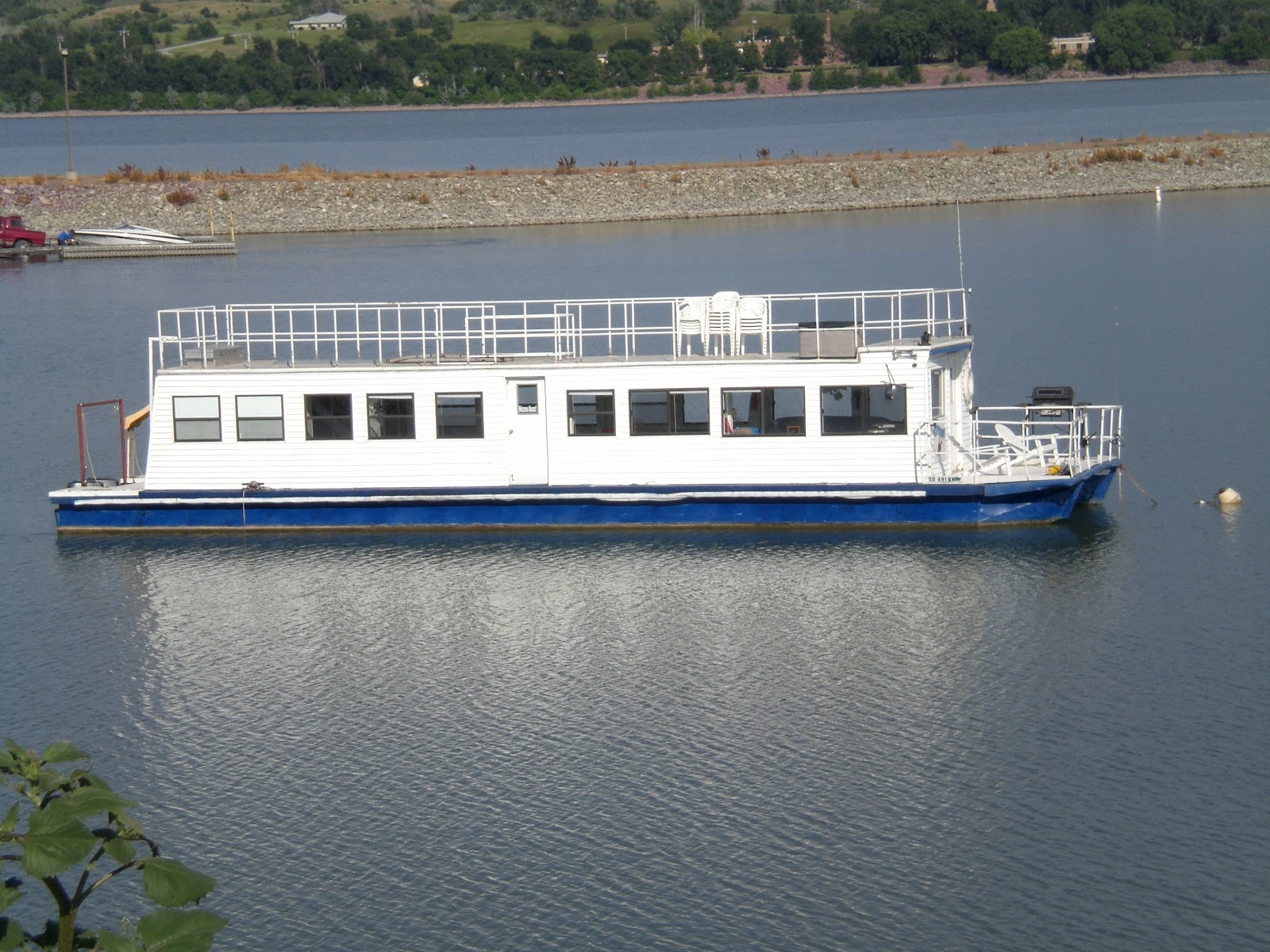
Because we live on a beautiful reservoir of the Missouri River (Lake Francis Case), boating has always been a traditional part of our Fourth of July celebration. We have had several boats through the years, but we had a 65 foot pontoon boat for ten fun-filled summers. If those ten Fourth of July celebrations on "The Krawdaddy" were the only ten times we had used that boat, it would have been worth the investment. We usually had 5-6 families with us on the river all afternoon before heading to the slip in the early evening to cook on the grill. After dinner and cleanup, it would be time to watch the community fireworks display from the top deck of "The Krawdaddy".
Our days on the river are now on our sailboat. "The BlewJay" offers a new angle on boating fun on the Fourth. We spend several hours on the water, usually in shifts, before returning home for the family Fourth of July cook out.

I have always enjoyed preparing a special cocktail for the Fourth. Whether margaritas or sangria or vodka lemonade prepared in volume or mint juleps fashioned individually, it is fun to prepare a special summer cocktail that is refreshing and relaxing. On occasion, there has been an extraordinary amount of relaxation!

It's time for the feast!
Perhaps my favorite Fourth of July tradition is to fire up the grill. We always have extended family, family friends and/or our kids' college friends celebrating with us. I enjoy cooking for a large group and especially enjoy grilling and smoking food. For years, the menu has included smoked featherbones and burgers as the main course. I usually smoke 15-20 pounds of featherbones in the days leading up to the holiday. Depending on the mood of my assistant chef, the accompaniments may include corn on the cob, baked beans, potato salad, watermelon and other delicious summer delectables.

Finally, we sit on our backyard patio overlooking the town and river and watching the community fireworks display. Because we live at the extreme western edge of the Central time zone, our fireworks don't usually start until after 10:00 pm. Often set to music, it is a fine show. On a calm night, you get the extra effect of the fireworks' reflection on the water. There is nothing like a fireworks display over water.
Our view of fireworks with an assist from Mother Nature.

By this time of the evening, mosquito repellent may be a very important part of the holiday festivities. If it has been a wet early summer, the aroma of sunsceen is replaced by the scent of Deep Woods OFF.

So each year on the Fourth, our celebration includes fireworks, featherbones and family. But let us never forget the most important part of our celebration - FREEDOM. Without it, there would not be a celebration.

Thursday, April 19, 2012

Why Are Used Vehicle Prices So High?

I am often asked why used car prices are so high. While they are generally expected to peak in April, used vehicle prices will remain stable for the next several months. In fact, compact and mid-size cars will appreciate in value and outpace other segments because of rising gasoline prices.

Why? Well flash back 33 months to the federal governments "Cash for Clinkers" program. While a boom for new vehicles, that program took 700,000 used vehicles off the road and sent them to the crusher. Those vehicles came from the lower end of the price spectrum and created a shortage in that price range.

At the same time, our country went from a 16 million new vehicle market, to 13.1 million in 2008, 10.5 million in 2009 and 11.2 million in 2010. In those three years, there were 13.2 fewer new vehicle transactions than in prior years.

According to NADA economist Paul Taylor, roughly 55 percent of new-car deals have a trade-in so that means about 7.3 fewer trades plus the 700,000 "clunkers" equals 8 million fewer vehicles in the used car market. If you understand a price curve or supply and demand, you understand that a lower supply means higher prices.

That is why trade-in values are at historically high levels - as much as 35% higher trade-in values for the same car as same-time a year ago. If you have a vehicle to trade, you can expect to get more trade value than in the past. If you have a low mileage or compact or mid-size car, you can expect top dollar in trade. High mileage SUVs have lagged as fuel prices have gone up.

It also means that if you have borrowed money on your vehicle, your equity position (the amount you owe compared to the value of the car) is at a peak as well.

If you typically buy a late-model used vehicle, you may want to consider an new model. The price difference is more than offset by the additional warranty and the fewer miles on the new vehicle.

Manufacturers are taking advantage of the inflated used vehicle prices by offering very lucrative lease deals. Lease payments are driven by the residual value of the leased vehicle (or predicted value of the new vehicle at the end of the lease). The higher the residual value, the lower the monthly lease payment. They are offering short term (24-30 month) leases using a strong residual value to drive lease payments to very, very attractive levels.

Leasing seems to be a bit confusing to people. I like the analogy of only buying a gallon of milk rather than the whole cow. Leasing allows you to pay for only that portion of the vehicle that you use. It also takes some of the risk out of vehicle ownership. You should at least have leasing under consideration.

Almost all new vehicles will offer better fuel economy as well. So regardless of whether you find buying or leasing more attractive for your situation, there has NEVER been a better time to get into a new vehicle.

Sunday, April 15, 2012

Shining Moments!

Each year, the NCAA men's basketball tournament ends with the song "One Shining Moment." Each year, I miss the debut of the video recapping that year's March Madness because I am at the finals. But I look it up on YouTube when I return home. I find that it is a rather emotional experience. It’s the last dose of March Madness for the year. When the music ends, the depression sets in. No more brackets. No more buzzer beaters. No more college basketball for at least six months.

The melody is really a part of hoops culture and one of the great sports traditions in our country. Even though the song is a bit cheesy, when the highlights are added, it becomes the perfect soundtrack for the month of March.

So I spent a rainy Sunday afternoon gathering links for the "One Shining Moment" for each year that it has been used. I have a couple of links to pre-"Shining Moment" CBS closing highlights. When I am really needing a college basketball fix, I can come back here and relive a bit of March from the past.

Enjoy!


Updated 3/28/2016